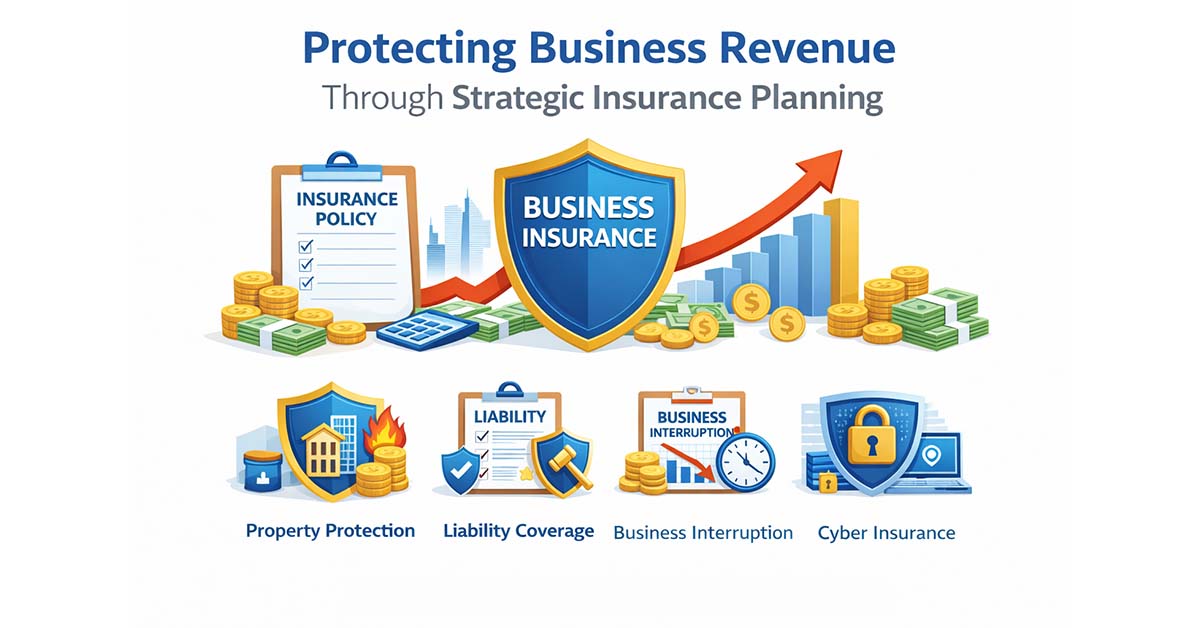
Every business carries risks that don’t announce themselves in advance. One unexpected event the sudden loss of a critical team member, a liability claim that drags on for months, or an operational shutdown can quietly dismantle years of revenue growth. That’s why key person insurance deserves serious attention from any business owner who’s thinking beyond next quarter. Strategic insurance planning isn’t a luxury. It’s a deliberate decision to protect what you’ve already earned.
Why Revenue Protection Is a Business Priority, Not an Afterthought
Most business owners pour energy into growth new clients, better systems, stronger teams. But very few apply the same level of intention to protecting the revenue those efforts generate.
The truth is, business revenue is more exposed than most people realize. It doesn’t take a catastrophic event to cause serious financial damage. A key employee suddenly unable to work. A contract dispute that freezes cash flow. A liability claim that arrives without warning. These aren’t rare scenarios, they happen to real businesses every year, and the ones that recover fastest are almost always the ones that planned ahead.
Insurance, when structured with purpose, acts as a financial buffer. It doesn’t prevent disruption, but it determines how much damage that disruption can do.
What a Real Company Risk Management Strategy Looks Like
Risk management gets treated like a formality in too many businesses something that lives in a folder and gets reviewed once every few years. That approach is expensive in ways that only become visible after something goes wrong.
A genuine company risk management strategy starts with asking uncomfortable questions:
- What happens to client relationships if your most important decision-maker is suddenly gone?
- Which revenue streams have no backup protection if operations are paused?
- How long could the business realistically sustain itself through a major claim or dispute?
Once those questions are answered honestly, the strategy becomes about filling the right gaps, not accumulating policies, but ensuring that no critical exposure is left unaddressed. Business interruption coverage, professional indemnity, and directors’ and officers’ liability each serve a specific purpose. The objective is a coherent structure, not a long list of documents.
This is exactly where working with an independent advisor adds real value. Without any product bias or provider allegiance, an advisor can map coverage to actual business exposure and give recommendations that are genuinely in the client’s interest.
Business Continuity Insurance: The Coverage That Gets Skipped Most Often
Business continuity insurance is built around one fundamental question: what keeps the business generating revenue when normal operations are disrupted?
Most business owners insure what they can physically see property, vehicles, equipment. What often gets overlooked is the income those assets are supposed to generate. That’s the gap continuity insurance is designed to close.
Consider what a sustained disruption actually costs:
- Lost revenue during downtime
- Fixed expenses that don’t pause: rent, payroll, loan repayments
- The cost of rebuilding client trust and operational momentum afterward
A two-week disruption might be manageable. A three-month one could permanently alter the trajectory of the business. The difference often comes down to whether continuity coverage was in place and whether the coverage limits reflected actual revenue figures rather than a conservative guess made years ago.
Precision Matters More Than Volume
A common mistake is equating more policies with more protection. That logic doesn’t hold up. Poorly structured, overlapping coverage can still leave businesses exposed in the exact areas they assumed were covered.
Strategic planning means reviewing coverage as the business grows, adjusting limits when revenue figures change, and understanding how claims work before you’re in the middle of one. An annual review isn’t administrative housekeeping, it’s active financial protection.
Protection That’s Built Around Your Business
Insurance decisions made without a clear understanding of a business’s revenue model, risk exposure, and growth stage often create a false sense of security. The paperwork exists, but the real protection doesn’t.
Jumbo Insurance takes a different approach, working as an independent advisor to help business owners build coverage strategies that are honest, precise, and actually aligned with what matters. Because protecting your revenue shouldn’t feel like guesswork.